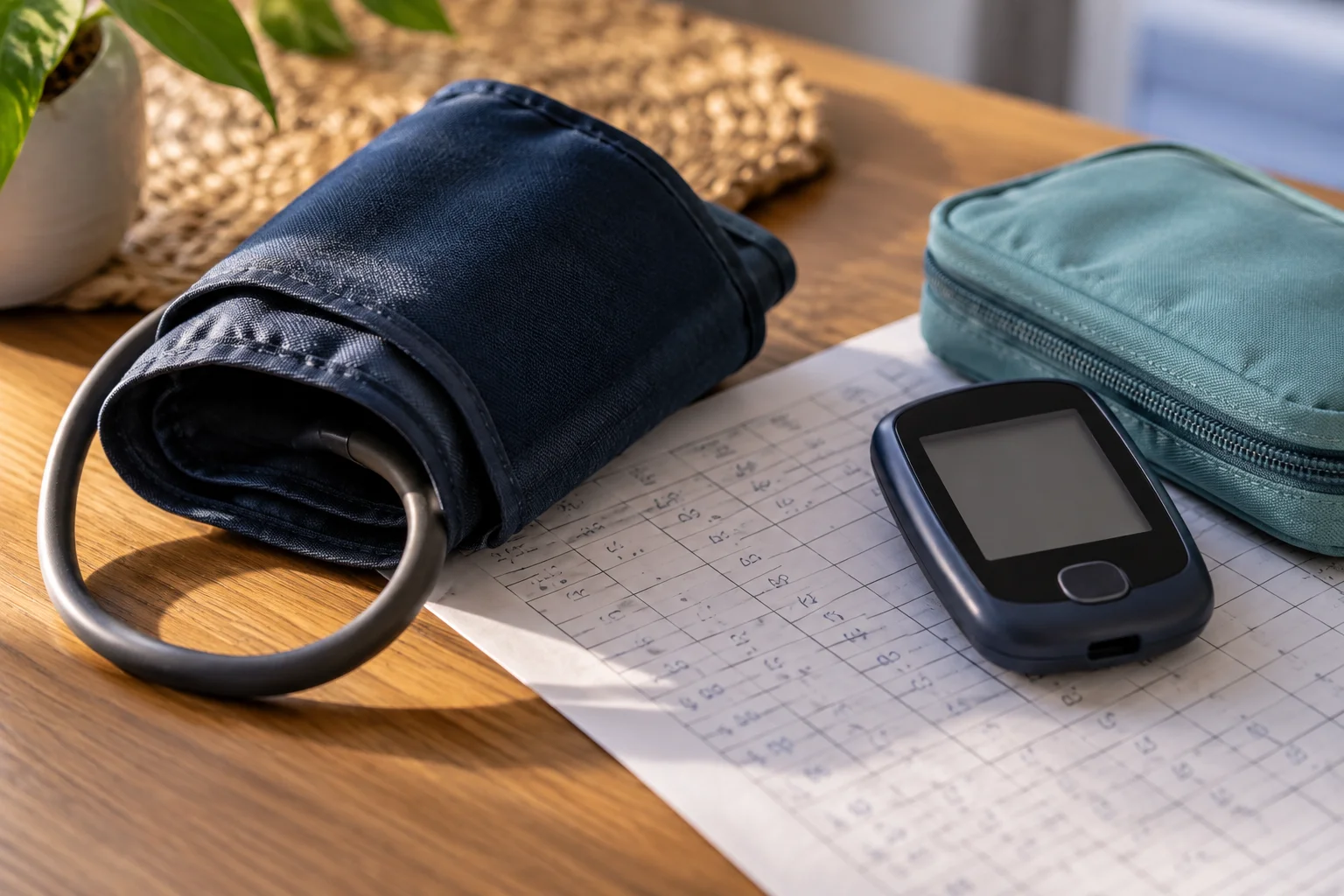
Living With Diabetes and High Blood Pressure: How to Organize Questions for a Care Visit
Prepare a concise care-visit summary when living with diabetes and high blood pressure. Organize recent changes, home records, medication information, and coordination questions without changing treatment on your own.
If you live with both diabetes and high blood pressure, prepare one concise visit summary that brings together your recent health changes, home readings, medication information, test results, and questions. The goal is not to interpret the information yourself or change your treatment. It is to give your health care provider an organized picture and make your priorities easier to discuss.
Diabetes involves blood glucose levels that are too high because the body cannot make insulin, cannot use it as effectively as it should, or both. Over time, high blood glucose can contribute to serious health conditions. MedlinePlus provides an overview of diabetes. High blood pressure means that the force of blood against artery walls remains elevated over time. It commonly has no symptoms, making regular checks important. MedlinePlus explains high blood pressure and its care.
Because these conditions may involve different readings, medicines, tests, and clinicians, it is easy for appointment notes to become scattered. A simple summary can keep the discussion focused without replacing your full medical record or your provider's assessment.
Why Prepare One Summary for Two Chronic Conditions?
A combined summary lets you place related information in one location. Instead of relying on memory during an appointment, you can show what has changed, what records you have, what remains uncertain, and which questions matter most to you.
Your summary does not need to include every detail from every day. Aim for a clear overview, then bring supporting logs or records in case your provider wants to examine them more closely.
What a concise summary can include
Your main priorities: List the two or three issues you most want to address.
Recent changes: Note changes in symptoms, daily routines, appetite, sleep, mobility, or general well-being.
Home records: Bring glucose and blood-pressure information in the format you already use.
Medication information: Include prescription medicines, nonprescription products, vitamins, and supplements.
Recent care: Note appointments, tests, urgent care visits, hospital care, or changes made by another clinician.
Coordination questions: Ask who should receive updates and whom to contact between visits.
A paper page, notebook, printed portal report, or electronic note may all work. Choose a format you can update and bring with you.
Build Your Visit Overview Around Recent Changes
Begin with what has happened since your last relevant visit. You do not need to decide whether a change is caused by diabetes, blood pressure, a medicine, or something unrelated. Record the facts and let your provider evaluate them.
Describe changes clearly
For each concern, note when you first noticed it, whether it has continued or changed, and how it affects your normal activities. If you cannot remember an exact date, an approximate time frame such as "early this month" may still help organize the conversation.
Useful details may include:
New or changing symptoms and when they began
Changes in eating, drinking, activity, sleep, stress, or daily routine
Illnesses, injuries, procedures, or hospital and urgent care visits
Difficulty obtaining, organizing, or taking a medicine as recorded on its instructions
Concerns about side effects or interactions that you want a clinician or pharmacist to review
New instructions received from another member of your care team
Changes in your ability to check or record information at home
Avoid trying to fit every concern into a diabetes or blood-pressure category. If a detail seems relevant to your health, include it briefly and ask whether it matters to the care plan.
Gather records from care received elsewhere
Your primary care record may not automatically contain every outside test or visit. Make a list of recent care from specialists, laboratories, hospitals, urgent care centers, pharmacies, or other facilities. Bring copies that are available to you, or ask which documents the office would find useful.
Possible records include recent laboratory reports, discharge paperwork, imaging reports, specialist summaries, and written instructions. Do not delay urgent care while trying to collect documents. Records are for routine preparation, not a substitute for immediate help when a concern is severe or urgent.
Prepare a Complete Medication and Supplement List
Create one current list of everything you take. Do not stop, start, skip, or change a medicine based on an article or because a reading looks different from usual. Questions about medicine changes belong with the prescribing clinician or another qualified health professional who knows your circumstances.
For each item, copy the information directly from the container, pharmacy label, medication list, or clinician's instructions. Include:
The exact name shown on the label
The strength and directions currently printed or prescribed
Why you understand that you take it, if known
The clinician or office associated with the prescription, if known
Prescription medicines from every clinician
Nonprescription medicines, vitamins, herbal products, and supplements
Allergies or previous medication reactions documented in your records
Questions about cost, refills, packaging, timing, side effects, or missed doses
If the written list may be incomplete, bring medication containers or pharmacy information if practical. Mark uncertainties rather than guessing. For example, write "not sure whether this is still current" so the care team knows what needs clarification.
High blood pressure care can involve lifestyle changes, medicines, or both, with the treatment plan developed together with a provider. MedlinePlus summarizes approaches to high blood pressure care. Your appointment is an appropriate time to ask how each part of your existing plan fits together, but individualized changes require direct professional guidance.
Organize Home Readings Without Interpreting Them Yourself
Bring the glucose and blood-pressure information you already collect, along with enough context for your provider to understand the record. This guide cannot establish how often you should check, what device you should use, or what your individual readings should be. Ask your provider for instructions that fit your health history and care plan.
Keep the original information visible
If possible, preserve dates, times, and the recorded values rather than providing only an average or a description such as "mostly good." A device history, app report, handwritten log, or portal record may be useful if it is understandable to you and accessible during the appointment.
Alongside the readings, briefly note context that you believe may matter. Examples include:
Whether a value was recorded before or after a meal, if this is part of your existing instructions
Whether you had recently been active, resting, ill, or under unusual stress
Any symptoms present around that time
A missed or delayed medicine, recorded as a fact rather than followed by a self-directed adjustment
Device problems, technique questions, or uncertainty about the result
Whether the reading was taken at home, a pharmacy, another clinic, or elsewhere
Do not edit out readings because they appear unusual or embarrassing. Instead, mark anything you are unsure about and ask how it should be understood. High blood pressure often causes no symptoms, so how someone feels does not replace blood-pressure measurement and professional review. MedlinePlus notes the importance of regular blood-pressure checks.
Ask whether your recording method is useful
At the visit, show your current method and ask whether the information is organized in a useful way. You can also ask whether your provider wants a different format in the future and what context should accompany home readings. This keeps the discussion focused on communication rather than assuming that one logging system suits everyone.
Questions to Ask About Monitoring and Coordination
Write your questions before the appointment and put the most important ones first. If time is limited, you will still have addressed your main concerns. Consider asking:
Which records are most useful? Ask whether the clinician wants device histories, written logs, laboratory reports, specialist notes, or another format.
How should I record context around home readings? Clarify what details should accompany glucose or blood-pressure information.
Are my current monitoring instructions still appropriate? Ask for individualized guidance rather than making assumptions from general health information.
How do my current medicines and supplements fit together? Point out prescriptions from different clinicians and any uncertainty in your list.
Who should receive updates? Ask whether information should be shared with a specialist, pharmacy, caregiver, or another clinician.
Who should I contact between visits? Clarify where to direct questions about readings, symptoms, medication concerns, refills, or device issues.
What follow-up is appropriate? Ask what the next step is, what information to bring, and how you will learn about test results.
If a family member or caregiver helps with your records, decide in advance what role you want that person to have. Bring their contact details if you want to discuss how updates may be shared, while recognizing that privacy procedures may apply.
Before the Visit: A Practical Preparation Checklist
Choose your top concerns. Write two or three priorities in plain language.
Summarize recent changes. Include approximate dates, effects on daily life, and care received elsewhere.
Collect available records. Gather test reports, visit summaries, discharge paperwork, or portal information relevant to the discussion.
Update your medication list. Include prescriptions, nonprescription products, vitamins, supplements, and uncertainties.
Bring home records. Keep dates and times visible, and note relevant context without trying to diagnose the pattern.
List your clinicians and pharmacies. Include names and contact information when available.
Write coordination questions. Ask who needs updates, who handles which concern, and whom to contact between visits.
Plan how to take notes. Bring paper, use an electronic note, or ask a trusted person to help if appropriate.
Confirm practical details. Check the appointment location, time, and any instructions supplied by the office.
Keep the first page brief. Attach longer records behind it or make them available electronically. Your summary should function as a guide to the conversation, not as a replacement for your medical history or a professional evaluation.
Common Questions About Visit Preparation
Should I bring every glucose and blood-pressure reading?
Bring the records you have, but ask the office or provider which time period and format are most useful. Do not discard unusual results. Preserve the date, time, value, and relevant context when available. Your provider can advise you about future monitoring and recordkeeping.
What if medication lists from different offices do not match?
Bring each list and clearly mark the differences. Include medication containers or pharmacy information if practical. Do not decide on your own which medicine should be removed or changed; ask the appropriate clinician or pharmacist to reconcile the information.
What if I cannot finish discussing every question?
Start with your highest priorities and ask how remaining concerns should be handled. The next step might involve follow-up communication or another appointment, but the appropriate process depends on the care setting and the nature of your concern.
Know When a Routine Visit Is Not Enough
An organizational guide cannot determine the cause or urgency of symptoms, interpret individual readings, diagnose a condition, or decide whether treatment should change. If you have an urgent or severe concern, seek immediate medical help rather than relying on educational information or waiting for a routine appointment.
For nonurgent concerns, contact the appropriate health care professional for individualized guidance. This is especially important when you are unsure what a reading means, have possible medication problems, develop new symptoms, or do not know which member of your care team should respond.
Learn how older adults and caregivers can organize health history, prior screening records, medications, practical needs, and questions for an individualized screening conversation with a healthcare professional.
Learn how patients and families can prepare for a palliative care conversation by noting symptoms, daily challenges, personal priorities, support needs, and care coordination questions.
A practical guide to organizing your reason for the visit, medical history, medications and supplements, prevention questions, and next steps before a primary care appointment in Naples.